
The Complete Cast Iron Skillet Care Guide: Seasoning, Cleaning & Maintenance
Mastering essential cast iron skillet care ensures your cookware develops a naturally slick, nonstick patina that lasts for generations. Demystifying cast iron cookware: how fat polymerization creates a durable seasoning layer, why modern dish soap will not harm your pan, and step-by-step stove maintenance.
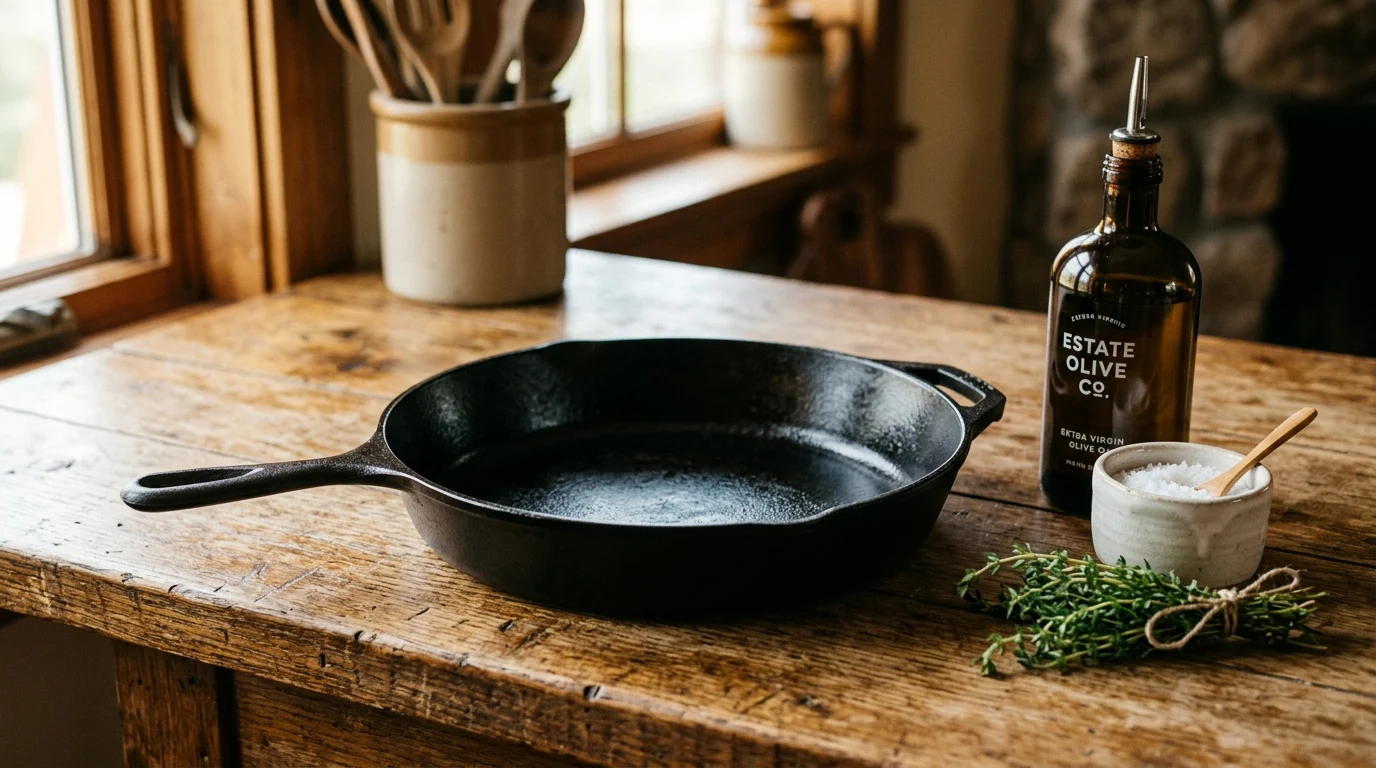
Cast iron cookware carries enduring culinary appeal, yet many home cooks hesitate to use it because of intimidating cleaning myths. Once you understand the basic chemistry of seasoning, caring for cast iron becomes straightforward and rewarding.
What Seasoning Actually Is (Fat Polymerization)
Seasoning is not a layer of residual grease. It is polymerized fat bonded to the iron surface. When an unsaturated cooking oil (such as grapeseed, canola, or sunflower oil) is heated past its smoke point in contact with bare metal, the fatty acids oxidize and cross-link into a hard, plastic-like molecular network that fills the microscopic pores of the cast iron.
Busting the Soap Myth
Myth: “Never use soap on cast iron.”
Fact: This guideline originated historically when lye-based homemade soaps were common, which chemically stripped lye-sensitive organic compounds. Modern liquid dish soaps are mild surfactants that bind to unpolymerized surface oils without harming the chemically cured seasoning layer. A gentle sponge with warm water and mild soap is completely safe.
The 5-Step Oven Seasoning Process
- Preheat oven to 450°F (232°C): Place a sheet of foil on the bottom rack to catch any potential drips.
- Wash and dry thoroughly: Clean the pan, dry with a lint-free towel, and heat on low stovetop heat for 2 minutes to eliminate all moisture.
- Apply a micro-thin oil layer: Pour 1/2 teaspoon of high-smoke-point oil onto the warm pan. Coat all surfaces, including the handle and exterior.
- Buff thoroughly: Use a clean paper towel to wipe the pan until it appears dry. Excess oil creates a sticky, uneven surface that flakes.
- Bake upside down for 1 hour: Place upside down on the center rack for 60 minutes. Allow to cool inside the oven before storage.
Daily Cleaning & Moisture Prevention
- Clean promptly: Rinse with hot water while the pan is warm. Use a non-scratch brush or chainmail scrubber for food residues.
- Stovetop drying is mandatory: Never air-dry cast iron. Always set the cleaned pan on a low burner for 2 minutes until completely bone-dry.
- Buff with a drop of oil: While warm, wipe 2–3 drops of neutral oil over the cooking surface to protect against ambient humidity.
Put Your Skillet to Work in These Recipes
Experience cast iron heat retention in these CookeryPulse recipes:
Ready to put your seasoned skillet to work? Try our cast-iron favorite Crispy Garlic Butter Chicken Thighs, or explore our complete Recipe Index for more tested dinner ideas.
Leave a Comment