
How to Store Fresh Herbs So They Last for Weeks
Mastering how to store fresh herbs means you will never throw away slimy cilantro or limp parsley again. Learn the water-jar bouquet method, the damp towel roll technique, and why fresh basil must never enter your refrigerator.
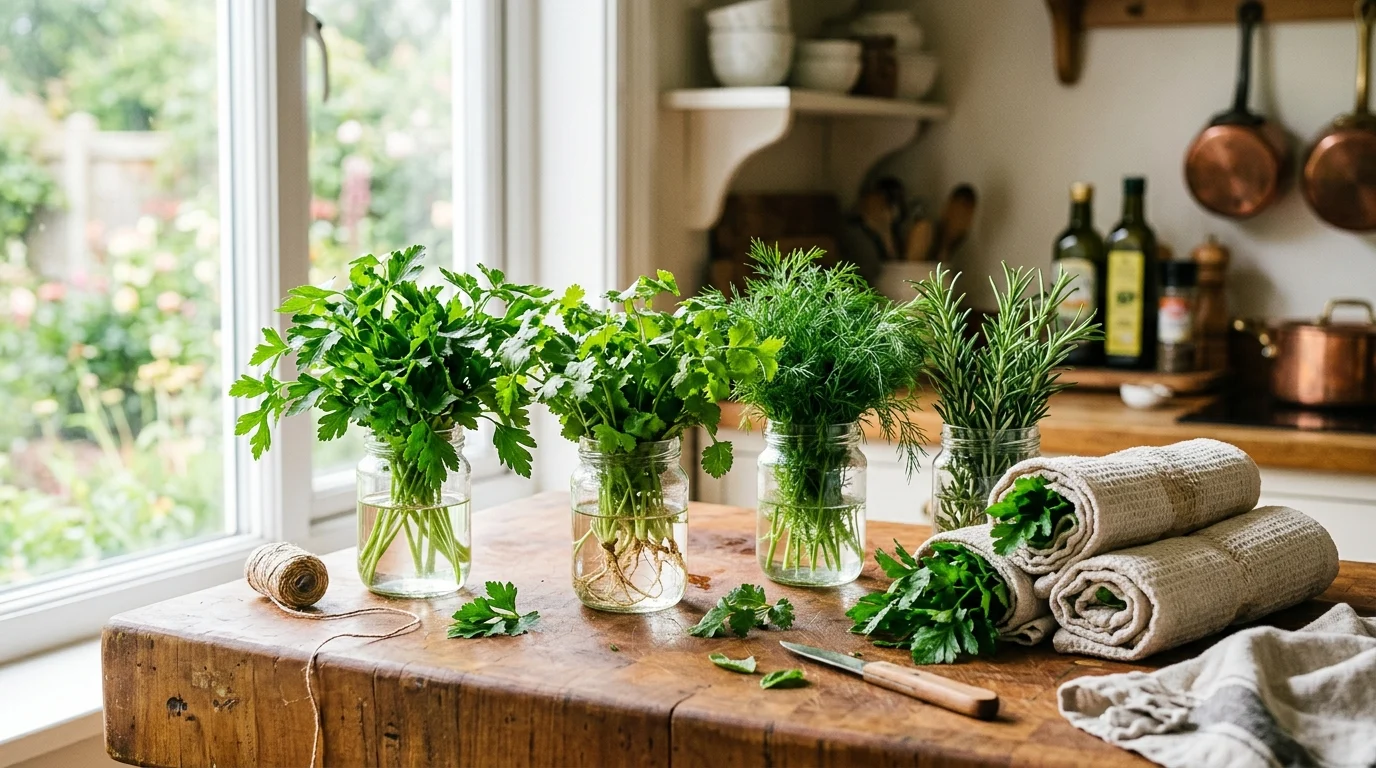
Fresh culinary herbs are delicate living plant tissues that continue to transpire water and consume oxygen after harvest. When left in commercial grocery plastic bags, condensation accumulates on the leaves, promoting bacterial soft rot within 48 to 72 hours.
Important Shelf-Life Factors
Storage durations vary significantly depending on the initial harvest freshness, transit cold-chain integrity, refrigerator temperature (ideally 34°F–38°F / 1°C–3°C), and humidity management. While proper storage methods can extend freshness up to 2 to 3 weeks for many herbs, bruised or aged produce will decline faster.
1. Tender Herbs: The Water-Jar Bouquet Method
Herbs in this category: Flat-leaf parsley, curly parsley, cilantro, dill, mint, and tarragon.
Tender herbs have soft stems and delicate leaves that lose moisture rapidly. According to agricultural postharvest guidance (such as the UC Davis Postharvest Technology Center), these herbs benefit from active stem water uptake paired with loose humidity buffering:
- Trim the stem ends: Snip 1/2 inch off the bottom stems at a 45-degree angle with clean kitchen shears.
- Remove submerged leaves: Strip any leaves that would sit below the waterline (underwater leaves rot and foul the water).
- Place in 1–2 inches of water: Use a clean glass jar or drinking glass filled with cool tap water.
- Cover loosely with a bag: Drape a plastic produce bag loosely over the herb tops like a mini-greenhouse to retain humidity while permitting air exchange.
- Refrigerate on door shelf: Store on a refrigerator door shelf and refresh the water every 3 to 4 days. Under good conditions, this method extends usability up to 2 to 3 weeks.
The Critical Basil Exception: Store at Room Temperature
Do not refrigerate fresh basil. Basil is a warm-climate botanical susceptible to chilling injury at temperatures below 50°F (10°C). Refrigeration causes the cellular membranes in basil leaves to rupture, leading to enzyme oxidation that turns leaves black and degrades volatile aroma within 24 hours. Place basil stems in a jar of water on your kitchen counter away from direct heat or harsh sun.
2. Hardy Wood Herbs: The Damp Towel Roll Technique
Herbs in this category: Rosemary, thyme, sage, oregano, and marjoram.
Hardy herbs possess woody stems and waxy, needle-like foliage adapted to drier environments. Submerging them in water can encourage mold. Instead:
- Lightly dampen a clean paper towel with cold water (wring it out thoroughly until barely moist).
- Arrange herb sprigs in a single layer on the towel.
- Roll loosely into a cylinder and place inside a sealed zip-top bag or airtight container in the vegetable crisper drawer.
Freezer Preservation: Herb-Olive Oil Cubes
For long-term storage of surplus herbs, finely chop clean leaves and pack into silicone ice cube trays (approx. 1 to 2 tablespoons per well). Cover with extra virgin olive oil and freeze solid. Pop individual cubes directly into a warm skillet to start pan sauces, soups, or roasted vegetables.
Recipes Utilizing Fresh Herb Techniques
Use fresh herbs at their best in these CookeryPulse recipes:
Use your vibrant fresh herbs in our zesty Easy Sheet-Pan Chicken Fajitas or discover more techniques in our Cooking Tips Hub.
Leave a Comment